Monument, Colorado / Daily travel
Commuting from Monument: I-25 & Monument Hill
A useful commute comparison starts at the driveway and ends at the workplace. Understand the local exits, the northbound South Gap corridor, winter conditions and the transit options before choosing a home.
01 / The everyday route
Start with the right interchange.
I-25 is the main highway link for trips north toward Castle Rock and the Denver area and south toward Colorado Springs. The final destination matters: a workplace in north Colorado Springs, central Colorado Springs, Lone Tree or downtown Denver produces a different door-to-door trip.
Exit 158: Baptist Road
Baptist Road is one of the principal I-25 access points to compare when touring the southern part of the Monument area. CDOT identifies it as Exit 158. Drive the actual approach from the home, including the intersections and turns needed to reach the appropriate ramp. CDOT interchange reference.
Exit 161: CO 105
CO 105 at Exit 161 serves the Monument area and the Monument Park-n-Ride. If using the bus, include the trip to the lot, parking and boarding time in the comparison. Bustang stop location.
North toward Castle Rock and Denver
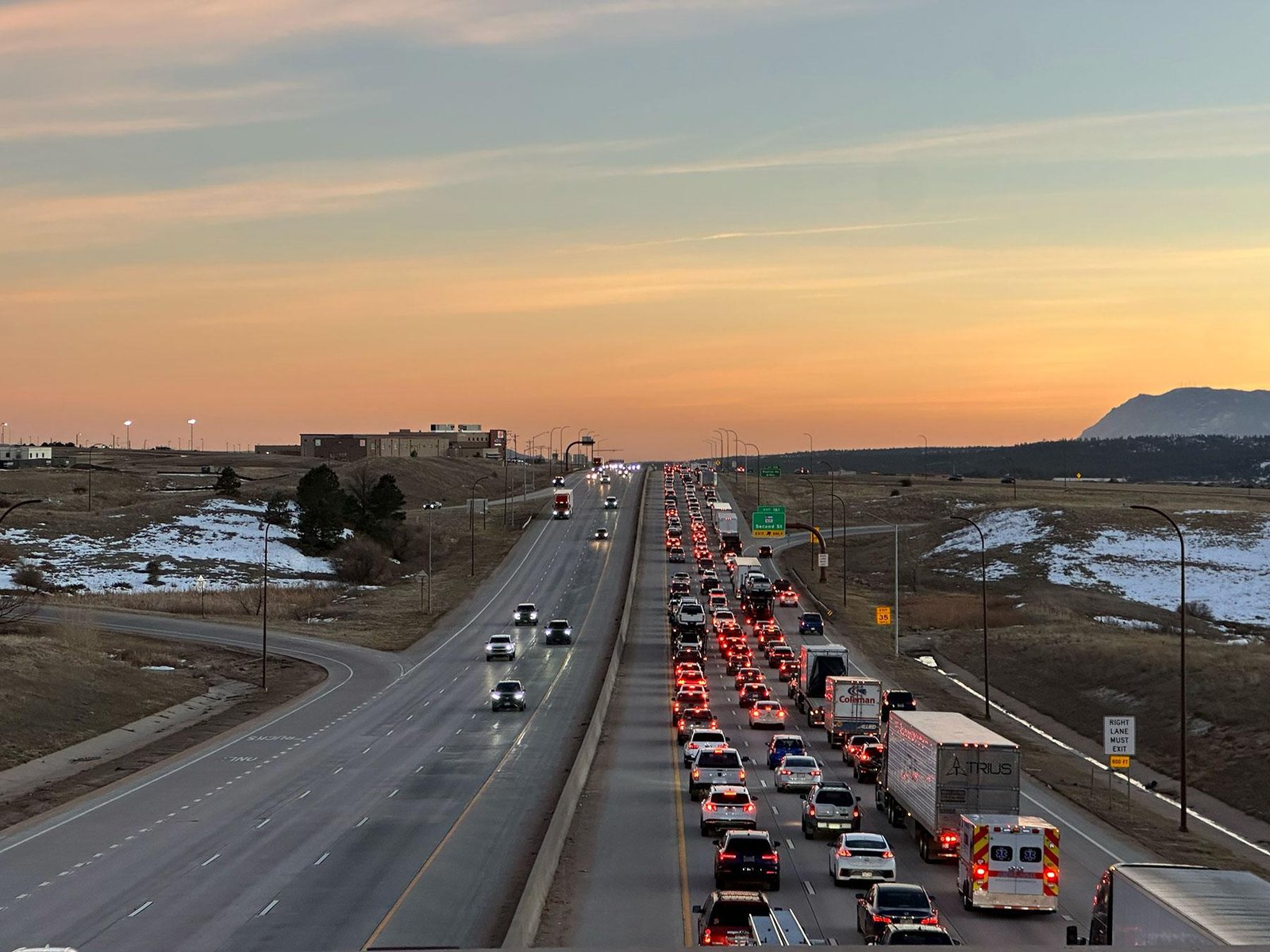
The I-25 South Gap corridor runs for 18 miles from Monument to south of Castle Rock. It is one part of a longer journey to many Denver-area workplaces. An improvement on this segment does not remove delays elsewhere on the route. CDOT South Gap overview.
South toward Colorado Springs
Test the full route to the workplace entrance and parking location. The nearest freeway ramp is only one part of the trip. Local traffic, the exit at the destination and the final surface streets can materially change the experience.
02 / Optional toll lanes
Understand the South Gap Express Lanes.
The Express Lanes provide an optional tolled lane alongside the general-purpose lanes. On the South Gap, vehicles with one or two occupants pay to use it. Eligible carpools need at least three people, an ExpressToll account and a switchable HOV transponder set to HOV to travel toll-free. Motorcycles can use this corridor’s Express Lanes without a pass. Check CDOT’s corridor-specific rules.
Use only the marked access points. Do not cross the double solid white lines to enter or leave the Express Lane. Read the signs early enough to make a safe lane choice.
Budget for a changing toll
CDOT introduced dynamic tolling on the South Gap in November 2024. Prices can respond to traffic conditions; the overhead signs show the current charge. License Plate Toll fees can differ from ExpressToll-pass pricing. Read CDOT’s dynamic-pricing explanation.
For a housing comparison, calculate the cost of the days you expect to use the lane rather than assuming one fixed daily price. Keep fuel, parking and any transit or connecting-service costs separate so the weekly total is clear.
03 / Weather and road conditions
Treat Monument Hill conditions as a separate check.
A clear driveway or a dry destination does not establish the conditions along the entire highway.
Before leaving, review COtrip for the route’s cameras, closures, road conditions and alerts. During a storm, allow for the possibility that travel should be delayed or a planned trip may not be practical.
CDOT can activate traction and chain requirements on state highways as conditions warrant. The requirements have changed in recent years, so use the current CDOT passenger-vehicle guidance for the vehicle and equipment you will drive. Four-wheel drive alone should not be treated as a substitute for checking the active restrictions.
A commute plan should also cover the first and last miles: driveway slope, shaded streets, the maintenance responsibility for the road, and where a vehicle can safely turn around or park. Ask about these features for the specific home rather than assuming all Monument addresses have the same winter access.
04 / Transit as an option
Consider the Bustang South Line.
Bustang’s South Line links Colorado Springs and Denver and lists a Monument Park-n-Ride stop at CO 105 and I-25, Exit 161. The route also lists Sky Ridge Station, Colorado Station and downtown Denver stops. Open the current South Line stops, schedules and fares.
Use the schedule for the correct direction and day. Check boarding and drop-off restrictions, the last workable return trip and any service alerts. A bus arrival is not the end of the commute if the workplace still requires a train connection, another bus or a walk.
Compare the whole routine
- Time from the home to the Park-n-Ride and the boarding point
- The scheduled trip that fits the actual work start time
- Connections and walking at the destination
- A return departure that works after meetings or overtime
- A backup plan for a missed departure or service disruption
05 / A buyer’s checklist
A practical commute test before buying.
A single map estimate is a snapshot. For each serious home candidate, record the same journey under comparable conditions and separate an observed time from an assumption.
- Use exact endpoints. Start at the property and finish at the workplace entrance or parking space, including any required gate or check-in.
- Match the workday. Try the departure and return windows that fit the real schedule. A weekend showing is a poor substitute for a weekday commute.
- Record what happened. Note the date, departure time, route, toll-lane use, weather and any incident. One drive cannot establish the full range of future conditions.
- Include routine stops. Add school drop-off, errands or charging only where they are actually part of the day.
- Compare the return trip. The evening approach to the neighborhood may feel different from the morning departure.
- Set a personal limit. Decide how much variability, cost and winter disruption the household can accommodate. Use that limit to compare properties.
This guide intentionally does not promise a fixed Monument-to-Denver or Monument-to-Colorado-Springs travel time. Departure time, exact endpoints, weather, incidents and construction all affect the result.
Monument commute questions.
Is a home near I-25 automatically a shorter commute?
Not necessarily. The local street route, ramp access, direction of travel and final destination all matter. Compare the actual door-to-door trip from each property.
Are the South Gap Express Lanes free for any carpool?
No. CDOT’s South Gap rules require three or more occupants plus the appropriate ExpressToll account and a switchable HOV transponder set to HOV for toll-free carpool travel. Check the current corridor rules before use.
Where should current road conditions be checked?
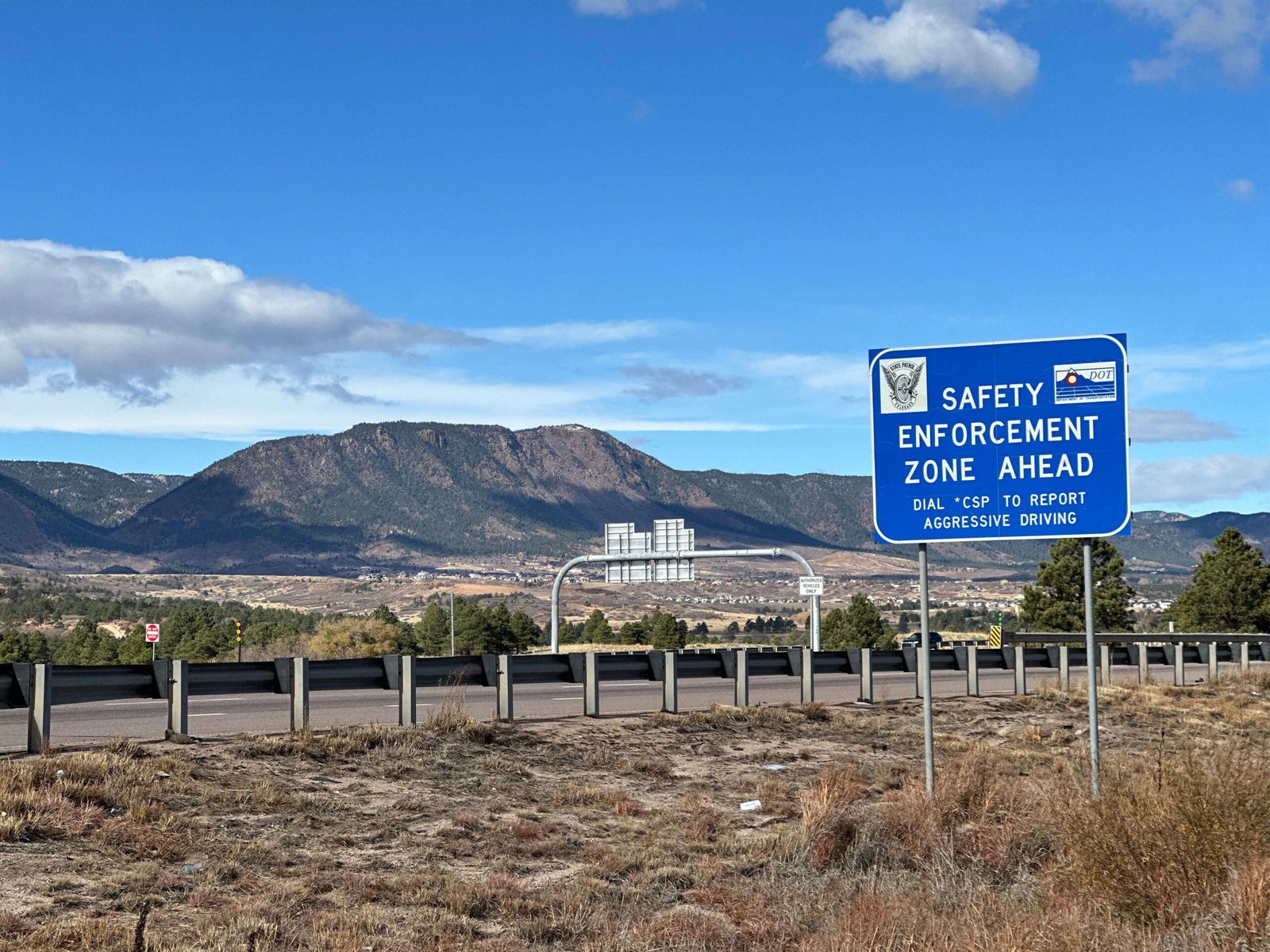
Use COtrip and official highway signs for current conditions, closures and restrictions. The photographs on this page are archived local images, not live traffic cameras.
Plan your home search
Compare the location as carefully as the home.
Shortlist homes with the actual work destination, departure times and weekly travel pattern in mind. A convenient interchange is useful, but the local approach, return trip and winter plan belong in the comparison too.